
Our Product Lines
Taping Supplies
Athletic tape, kinesiology tape, strapping materials, and clinical-grade adhesives from trusted brands. We stock a full range of gauges and formulations to support every taping application—from acute injury stabilization to long-term support protocols.
Bracing & Support
Ankle braces, knee braces, wrist and hand supports, compression garments, and orthopedic braces for all body areas. Each product is selected for clinical efficacy, fit, and durability—meeting the demands of active rehab environments and clinic workflows.
Rehabilitation Equipment
Clinical-grade treatment tables, therapeutic devices, diagnostic tools, and equipment support services. We also offer repair, inspection, and calibration services to extend equipment life and maintain clinical reliability.
Need help selecting the right products for your clinic?
Call (641) 860-1745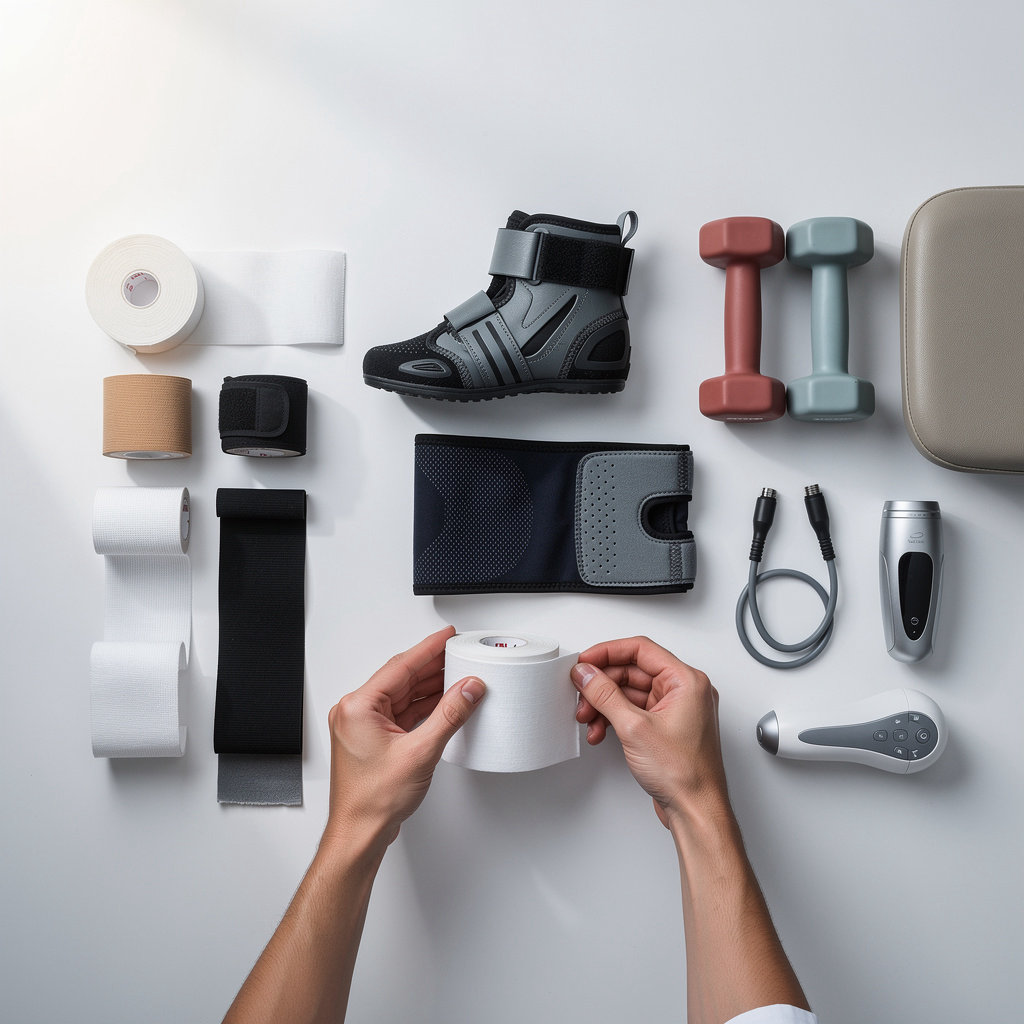
How to Select the Right Sports Medicine Supplies
Choosing the right taping supplies, braces, and rehabilitation equipment is essential for effective patient care. This guide helps you navigate the selection process with confidence.
Tape Selection Guide
Athletic Tape vs. Kinesiology Tape
Athletic tape (rigid tape) provides maximum support and restriction, making it ideal for preventing motion and stabilizing joints during high-impact activities. Kinesiology tape offers elastic support with greater comfort for extended wear and is designed to facilitate movement while providing proprioceptive feedback.
Choose athletic tape for: Ankle support, wrist stabilization, preventive taping before competition
Choose kinesiology tape for: Extended wear during rehabilitation, proprioceptive support, muscle support without restricting motion
Gauge, Backing, and Material Considerations
Tape width (typically 1.5" to 2") affects coverage area and application ease. Foam backing provides comfort for sensitive skin, while cloth backing offers durability for high-friction areas. Material composition—cotton, synthetic blends, or elastic fabrics—determines breathability and adhesive performance.
For sensitive skin: Hypoallergenic athletic tape with foam backing
For maximum durability: Cotton athletic tape with aggressive adhesive
For rehabilitation: Elastic kinesiology tape with longer wear time (3–5 days)
Brand Comparisons and Clinical Applications
We carry trusted brands known for clinical reliability and performance. Different brands offer varying adhesive strengths, tear characteristics, and price points. Consider your clinic's primary applications—ankle support, shoulder stabilization, or general taping—and test multiple brands to find the best fit for your workflow and patient needs.
Brace Fitting & Selection Guide
Understanding Support Levels
Sports braces come in three primary support categories: mild (compression sleeves, basic support), moderate (hinged braces, functional support), and maximum (rigid orthoses, maximum restriction). The right support level depends on the injury severity, activity level, and rehabilitation stage.
Mild support: Compression garments for minor sprains, prevention, and general support during activity
Moderate support: Hinged braces for ligament injuries, functional support during return-to-activity
Maximum support: Rigid orthoses for severe sprains, post-injury immobilization, or chronic instability
Sizing and Fit for Different Body Areas
Proper sizing is critical for brace effectiveness. Most manufacturers provide sizing charts based on circumference measurements (ankle circumference, knee circumference, wrist circumference, etc.). A well-fitted brace should be snug without cutting off circulation, and should allow proper movement while providing intended support.
Ankle braces: Measure ankle circumference at narrowest point; ensure proper arch support and heel cup fit
Knee braces: Measure knee circumference at center of kneecap; ensure proper patellar tracking and lateral support
Wrist/hand supports: Measure wrist circumference and hand width; ensure proper thumb positioning and carpal support
Compression Guidelines and Material Selection
Compression level (measured in mmHg) affects blood flow, swelling reduction, and proprioceptive feedback. Light compression (8–15 mmHg) provides mild support and swelling reduction. Moderate compression (15–25 mmHg) offers functional support for active rehabilitation. High compression (above 25 mmHg) is used for severe swelling or post-surgical applications.
Choose breathable, moisture-wicking materials for extended wear. Neoprene provides warmth and compression, while synthetic blends offer better breathability for active patients.
Rehabilitation Equipment Evaluation
Durability and Clinical-Grade Standards
Rehabilitation equipment must withstand daily clinical use and frequent disinfection. Look for equipment certified to medical standards, constructed with reinforced joints and heavy-duty materials, and backed by manufacturer warranties. Clinical-grade equipment typically has longer service life and better safety profiles than consumer-grade alternatives.
Verify that equipment meets relevant safety certifications and is designed for multi-patient clinical environments.
Space Requirements and Clinic Integration
Before purchasing, assess your clinic's available space and workflow. Consider equipment dimensions, storage requirements, and how the equipment integrates with existing treatment areas. Some equipment serves multiple purposes, which can maximize utility in limited spaces.
Key questions: Where will equipment be stored? How frequently will it be used? Does it require dedicated space or can it be moved between treatment areas?
Budget Considerations and Total Cost of Ownership
Evaluate equipment not just on purchase price, but on total cost of ownership—including maintenance, repairs, replacement parts, and calibration services. High-quality equipment may cost more upfront but typically requires fewer repairs and has longer service life, reducing long-term costs.
We offer equipment repair, inspection, and calibration services to extend equipment life and reduce total ownership costs.
Equipment Maintenance and Support Services
Regular maintenance is essential for safe, effective equipment operation. We provide inspection, calibration, and repair services to keep your equipment in optimal condition. Preventive maintenance programs help identify potential issues before they impact patient care.
Quick Selection Framework
Define the Need
Identify the specific injury, body area, activity level, and rehabilitation stage. This determines the category and support level required.
Compare Options
Review available products within the appropriate category. Consider material, support level, sizing, and cost. Test multiple brands if possible.
Verify & Order
Confirm sizing and specifications. Call us for personalized recommendations or bulk pricing for clinic accounts.
Need Help Selecting Products?
Our team is ready to help you find the right sports medicine supplies for your clinic's specific needs. Whether you're looking for taping supplies, braces, or rehabilitation equipment, we can provide personalized recommendations and bulk pricing for clinic accounts.
Taping Techniques & Resources
Master the fundamentals of clinical taping with our comprehensive guides and best practices. These resources are available to all customers to support your clinical practice and patient outcomes.
Common Taping Techniques
Ankle Taping
Comprehensive guide to ankle strapping techniques for inversion sprains, proprioceptive support, and injury prevention. Covers anchor placement, stirrup technique, and heel lock methods.
Step-by-step instructions with product recommendations for athletic tape and adhesive materials.
Knee Taping
Detailed techniques for patellar stabilization, patellofemoral pain management, and anterior knee support. Includes guidance on tape tension and anatomical landmarks.
Ideal for athletes and active patients requiring dynamic knee stability during movement.
Shoulder Taping
Methods for glenohumeral stability, rotator cuff support, and scapular positioning. Covers acromioclavicular joint stabilization and postural support techniques.
Essential for overhead athletes and patients with shoulder instability concerns.
Wrist & Hand Taping
Techniques for wrist stability, carpal tunnel support, and finger taping methods. Includes guidance on thumb stabilization and grip strength maintenance.
Critical for athletes in racquet sports, gymnastics, and throwing activities.
Elbow Taping
Methods for lateral epicondylitis (tennis elbow), medial epicondylitis (golfer's elbow), and general elbow stabilization. Includes compression and support techniques.
Designed to reduce pain and support healing during continued activity.
Lower Leg & Foot
Techniques for shin splints, plantar fasciitis, Achilles tendon support, and arch stabilization. Covers both athletic tape and kinesiology tape applications.
Essential for runners and patients with lower extremity biomechanical issues.
Best Practices for Tape Application
Prepare the Skin
Clean and dry the area thoroughly. Remove excess hair if necessary using clippers (not razors). Apply pre-tape spray or adherent spray to ensure optimal tape adhesion and skin protection. Allow the area to dry completely before applying tape.
Position for Support
Position the joint or body area in the desired position for support before applying tape. For ankle taping, maintain a 90-degree angle. For knee taping, position the knee in slight flexion. Proper positioning ensures the tape provides support in the functional position.
Apply Anchors First
Anchors are the foundation of any taping technique. Apply anchors around the joint without tension—they should be snug but not restrictive. Anchors prevent the tape from shifting during activity and provide the base for support strips.
Apply Support Strips with Tension
Support strips provide the primary stabilization. Apply these with appropriate tension—firm enough to provide support but not so tight as to restrict circulation or cause discomfort. Smooth out air bubbles and ensure complete contact with the skin.
Finish with Circumferential Strips
Complete the taping with circumferential strips applied without tension. These strips lock everything in place and prevent individual strips from peeling up during activity. They also provide compression and proprioceptive feedback.
Safe Removal
Remove tape carefully at the end of the day or activity. Pull the tape in the direction of hair growth to minimize skin irritation. Use tape remover or warm water to soften adhesive if needed. Inspect the skin for any irritation or breakdown and allow the area to breathe.
Tape Products for Every Application
Athletic Tape
Rigid athletic tape provides maximum support and stability. Ideal for acute injuries, high-demand sports, and situations requiring strong restriction. Available in various widths and roll lengths to match your clinical needs.
Best for: Ankle strapping, knee support, joint stabilization during competition.
Kinesiology Tape
Elastic kinesiology tape provides proprioceptive support with greater freedom of movement. Allows full range of motion while providing muscle support and lymphatic facilitation. Designed for longer wear periods (3-5 days).
Best for: Chronic conditions, training support, proprioceptive feedback, extended wear.
Pre-Tape & Adherents
Pre-tape spray and adherent products protect the skin and improve tape adhesion. Essential for sensitive skin, hairy areas, and extended wear applications. Available in aerosol and liquid formats.
Best for: Skin protection, improved adhesion, extended tape durability.
Tape Removal & Care
Tape removers and skin care products ensure safe tape removal and skin health. Protects the skin barrier and prevents irritation from repeated taping. Includes moisturizers and healing products for post-tape care.
Best for: Safe removal, skin protection, post-taping recovery.
Ready to Stock Your Clinic?
Browse our complete selection of taping supplies and get the clinical-grade products your team needs. Call us to discuss bulk pricing and clinic account options.
Call (641) 860-1745Equipment Support Services
Extend the life of your rehabilitation equipment and reduce total cost of ownership with our comprehensive support services. From repair and maintenance to calibration and refurbishment, we help keep your clinic's equipment in peak condition.
Equipment Repair Services
Damaged or worn equipment doesn't have to be replaced. Our technicians diagnose and repair common issues with therapeutic devices, treatment tables, and diagnostic tools—restoring functionality and extending equipment life.
- • Damage assessment and diagnostics
- • Component replacement and repair
- • Quick turnaround and shipping included
Inspection & Maintenance Programs
Preventive maintenance keeps equipment reliable and safe. We offer scheduled inspection and maintenance programs to identify potential issues before they impact patient care—reducing downtime and extending equipment lifespan.
- • Routine inspections and condition assessment
- • Preventive maintenance schedules
- • Documentation and compliance records
Calibration Services
Diagnostic and therapeutic equipment must maintain accurate specifications to provide reliable results. Our calibration services ensure your tools meet clinical standards and regulatory requirements for precision and safety.
- • Precision calibration to clinical standards
- • Regulatory compliance verification
- • Calibration certificates and documentation
Equipment Refurbishment & Upgrades
Extend the useful life of aging equipment through refurbishment and component upgrades. We assess your current equipment and recommend cost-effective solutions to keep it performing at clinical standards without full replacement.
- • Deep cleaning and restoration
- • Component upgrades and modernization
- • Cost-effective alternatives to replacement
Why Equipment Support Matters
Reduce Total Cost of Ownership
Preventive maintenance and timely repairs extend equipment life significantly, reducing the need for costly replacements and maximizing your investment.
Minimize Downtime
Quick repair turnaround and scheduled maintenance keep your equipment available when clinicians need it, supporting uninterrupted patient care.
Ensure Clinical Safety
Regular inspections and calibration verify that equipment meets clinical standards and regulatory requirements, protecting both clinicians and patients.
Ready to Extend Your Equipment's Life?
Contact us today to request a service quote, schedule an inspection, or discuss a maintenance program tailored to your clinic's needs.
Call (641) 860-1745 for Service QuoteOur team is ready to help you maximize the value of your sports medicine equipment.